


 inquiry
 download
 RMA
RMA Product News

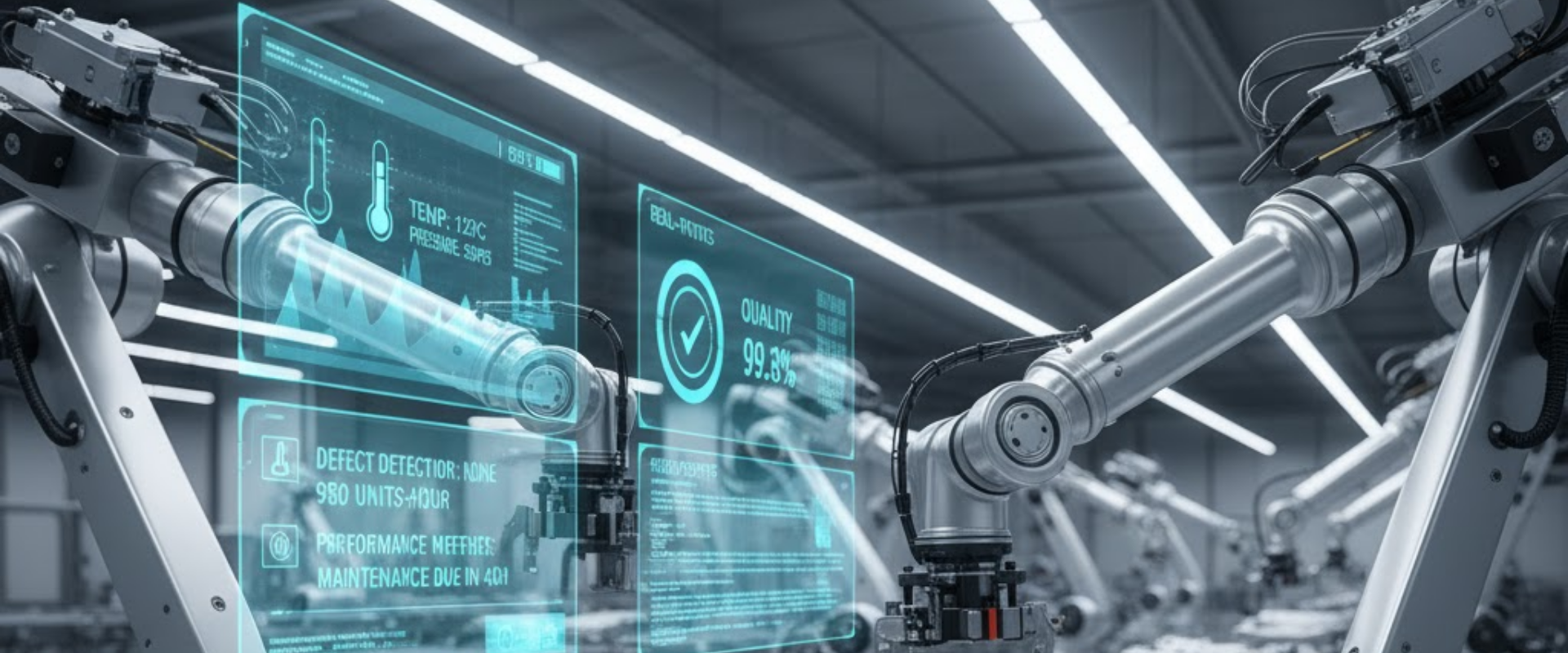
Industrial automation is rapidly evolving, driven by the transformative power of artificial intelligence (AI). By 2025, the industrial automation market is expected to reach approximately $205.11 billion, growing at a significant compound annual growth rate (CAGR) of 5.8%. Manufacturers are swiftly embracing AI technologies to remain competitive, optimize operations, and increase productivity.
The Role of AI in Modern Industrial Automation
AI helps factories operate more efficiently and competitively. It's not a question of whether to use AI, but how fast companies can successfully integrate it into their existing operations. AI in industrial automation refers to the use of intelligent systems capable of learning from data and adapting to perform tasks traditionally managed by humans. These tasks range from simple repetitive functions to complex decision-making processes involving predictive maintenance and real-time quality control.
Through advanced algorithms and machine learning techniques, AI analyzes sensor data, predicts machinery performance, and autonomously adjusts operational parameters for optimal outcomes. This technological shift allows machines to detect anomalies, anticipate equipment failures, and recommend maintenance proactively. It is fundamentally reshaping production standards across industries.
Market Drivers and Trends in 2025
Several factors are fueling the rapid adoption of AI within industrial automation by 2025. A key driver is the persistent demand for operational efficiency and productivity improvements. Recent study shows that businesses leveraging AI can expect productivity gains of up to 25%, with future projections indicating potential increases as high as 40%.
Additionally, advancements in edge computing, combined with increasing data-processing capabilities, lead to quicker, localized decision-making on the production floor. This trend towards edge AI, facilitated by powerful Industrial PCs (IPCs) and industrial IoT gateways to reduces latency, enhances reliability, and supports more responsive and adaptable manufacturing processes. IoT gateways play a critical role here by collecting data from sensors, PLCs, and legacy machines, then processing or filtering that data at the edge before sending it to IPCs or cloud platforms. This helps factories transition smoothly from traditional automation to AI-enabled operations, driving widespread adoption across various sectors.
Types of AI in Industrial Automation
AI in industrial automation combines multiple technologies to improve efficiency, accuracy, and adaptability. Each type of AI serves a specific function, from detecting defects to predicting equipment failures. These technologies are already being used by leading companies in real-world industrial settings.
1. Machine Learning
Machine learning is a type of AI that uses data to recognize patterns and make predictions. Unexpected equipment failures and inefficient maintenance schedules often lead to costly production delays and resource waste.
To solve this, machine learning primarily used for predictive maintenance, analyzing historical data to foresee potential equipment failures. This significantly reduces unexpected downtime and maintenance costs. One of the example is Bosch applies machine learning in its predictive maintenance platform across factories globally, reducing unplanned downtime by up to 30%.
2. Computer Vision
Computer vision allows machines to interpret and process visual information from the physical world. Manual inspections are often inconsistent and prone to human error, which leads to missed defects and reduced product quality. In response, computer vision systems powered by AI have significantly improved quality control in manufacturing. These systems now achieve defect detection accuracy rates exceeding 97%, compared to the 60–70% accuracy typically associated with manual inspections.
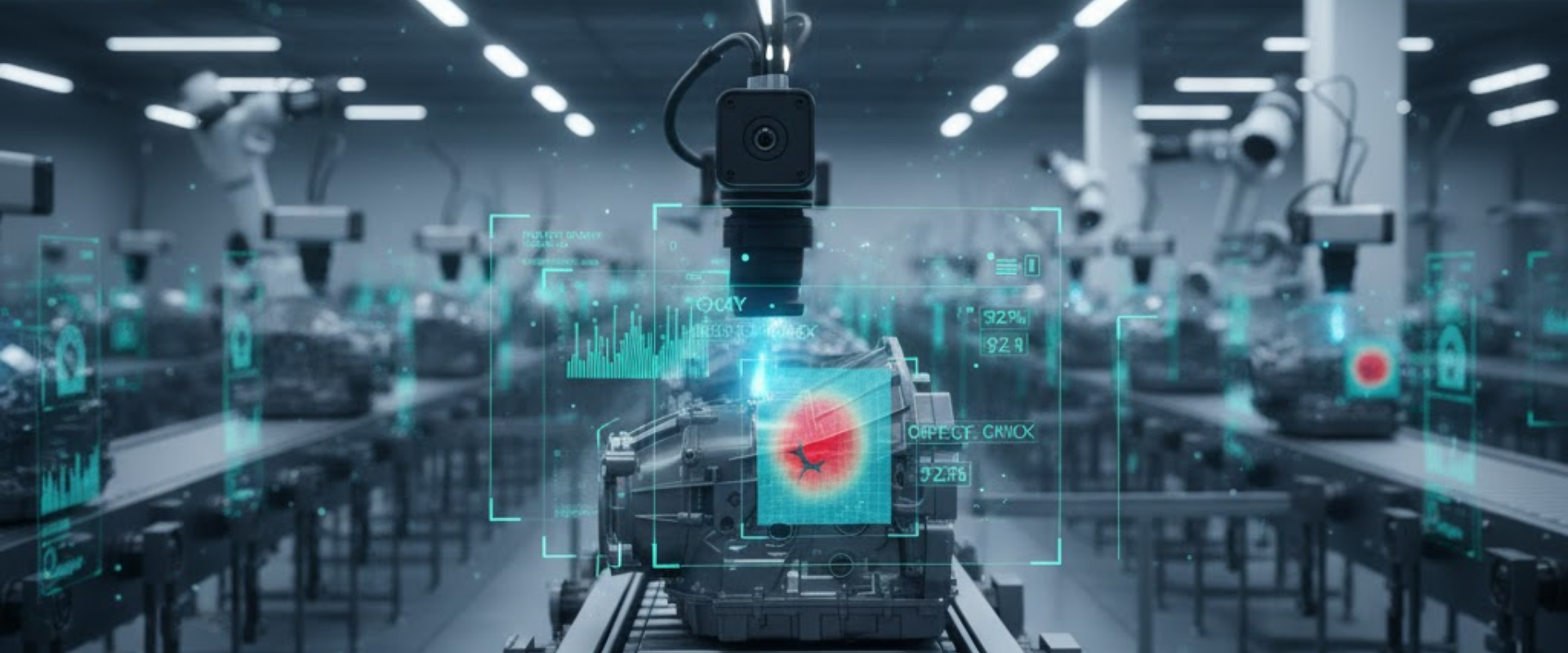
BMW applies this technology on its assembly lines for defect detection and process validation, improving inspection speed and accuracy.
3. Natural Language Processing (NLP)
Complex machine interfaces can slow down operations and make training more difficult for factory workers. NLP addresses this by making human-machine interactions more intuitive, simplifying command and control systems through voice and textual commands.
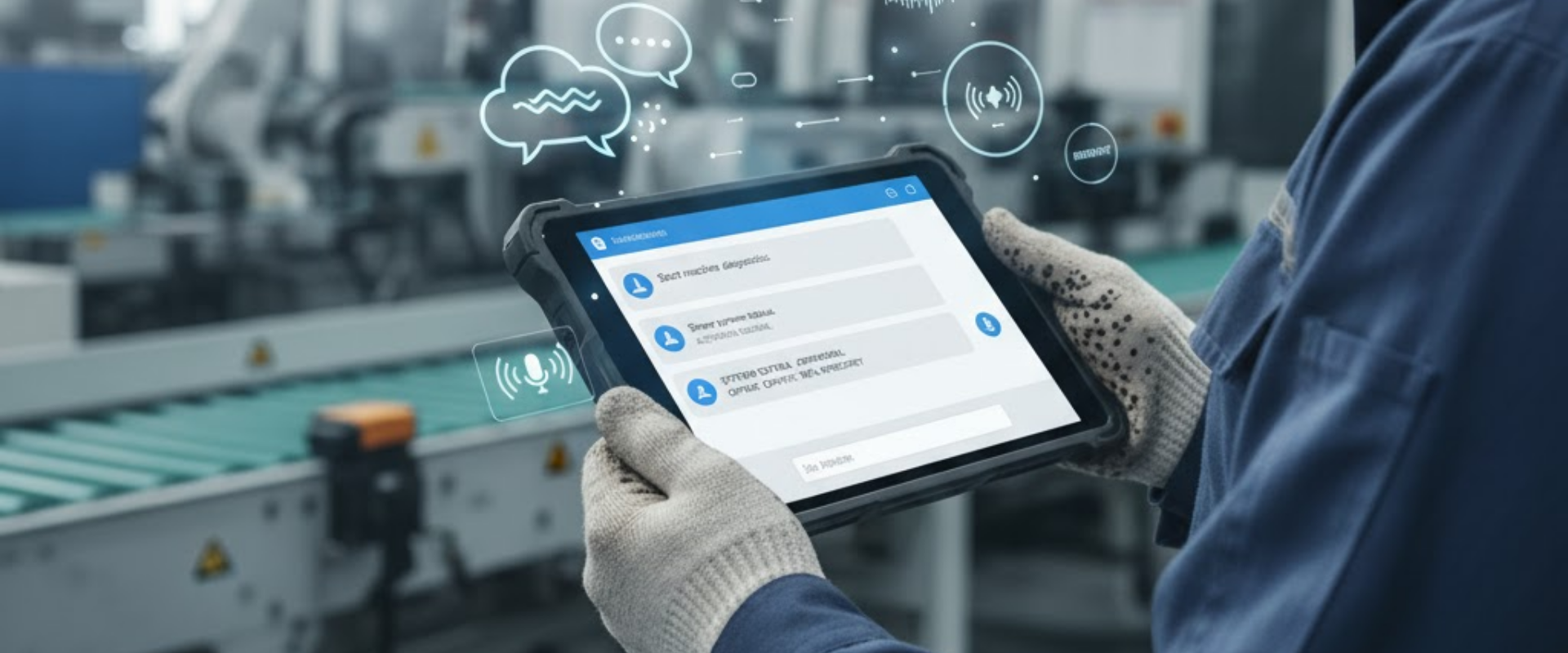
For instance, Siemens integrates NLP into smart factory assistants, enabling workers to interact with machines using natural language.
4. Reinforcement Learning
Reinforcement learning is a method where machines learn to make decisions by receiving feedback from their actions. Traditional industrial robots struggle to adapt in dynamic environments or improve their behavior over time.
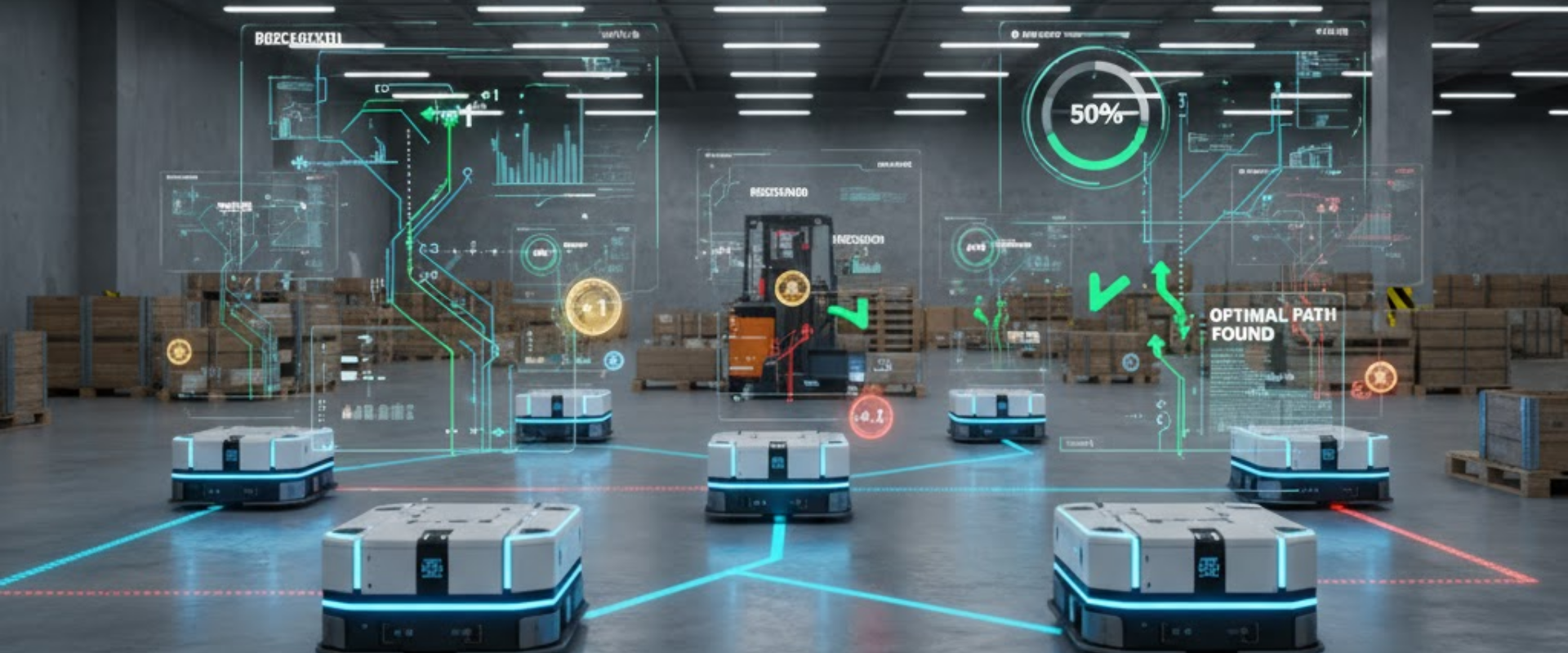
Reinforcement learning overcomes this by allowing robots to learn and optimize their actions through interaction with their surroundings. This approach is demonstrated by Google DeepMind’s reinforcement learning algorithms, which have been tested in warehouse robotics to improve pick-and-place efficiency.
5. Physical AI
Physical AI focuses on giving machines the ability to interact with the physical world through real-time perception, motion control, and sensor fusion. Traditional robots operate using fixed instructions and struggle to adapt when the environment changes.
Physical AI enables robots and automated equipment to sense, understand, and respond to physical conditions on the factory floor. This includes tasks such as dynamic path planning, multi-sensor data fusion, and real-time decision-making for handling unpredictable workflows. Many leading manufacturers are using physical AI to improve precision assembly, advanced robotics, warehouse automation, and automated inspection systems.
We covered this topic in more detail in our dedicated Physical AI article
6. Generative AI
Conventional product design and documentation processes are often slow and lack flexibility for customization. Generative AI changes this by supporting rapid prototyping, accurate documentation, and efficient product customization. A real-world application of this is Autodesk’s use of generative AI, which helps engineers generate optimized design models based on structural and functional constraints.
Industry 4.0 vs. Industry 5.0: The Evolution
The move from Industry 4.0 to Industry 5.0 marks a significant change in how factories operate. Industry 4.0 mainly focused on digital transformation, automation, and efficient communication between machines. The goal was to optimize operations and boost productivity through interconnected technology.
In contrast, Industry 5.0 reintroduces the human element into these automated systems, highlighting cooperation between humans and intelligent machines. This collaboration aims to achieve manufacturing processes that are not just efficient, but also sustainable and tailored to individual and business needs.
This evolution from Industry 4.0 to Industry 5.0 does not mean automation becomes less important. Instead, automation is now combined with human intelligence and creativity. This helps workers grow in their roles and leads to better quality products and more flexible production. It also supports ethical and environmentally friendly ways of working, aligning production processes with growing societal and environmental expectations.
According to the World Economic Forum, about 70% of industry leaders believe that by 2025, collaboration between people and machines will be crucial for businesses to stay competitive.
How AI Applications Differ in Industry 4.0 vs Industry 5.0
While Industry 4.0 laid the groundwork for digital transformation, its AI applications were largely focused on automation, efficiency, and machine-to-machine communication. Industry 5.0 introduces AI tools that prioritize human-AI collaboration, sustainability, and personalization.
| AI Function | Industry 4.0 | Industry 5.0 |
| Predictive Maintenance | Uses machine learning to anticipate equipment failures | Still applied, but enhanced with real-time human feedback |
| Computer Vision | Focuses on defect detection, object tracking | Integrated into human-in-the-loop systems for complex inspections |
| Reinforcement Learning | Rarely used | Enables adaptive robotics that respond to humans in real-time |
| NLP (Natural Language) | Limited or not applied | Supports intuitive voice commands and multilingual interfaces |
| Generative AI | Not commonly applied | Helps design custom parts, automate documentation, and support workers |
| Physical AI | Not commonly applied | Enables real-time perception, motion control, and sensor fusion so machines can interact safely and intelligently alongside humans |
In Industry 4.0, the role of AI was mostly to replace manual tasks. Machines analyzed data, issued alerts, and automated functions without much human interaction. For example, AI would detect anomalies in machinery, then alert operators for manual action.
By contrast, Industry 5.0 makes AI an interactive partner. NLP allows technicians to talk to machines. Cobots use AI vision and motion planning to work side-by-side with humans safely. Generative AI designs tools or components based on real-time factory needs.
AI and computer vision are reshaping how humans and robots work together. A 2025 research found that cobot systems with real-time monitoring not only boost productivity but also help lower safety risks and support more ergonomic workflows.
Key Benefits of AI in Industrial Automation
Integrating AI into industrial automation brings measurable gains in efficiency, productivity, and accuracy. By automating repetitive tasks and enabling real-time analytics, AI reduces human error, optimizes workflows, and improves product reliability. It also helps cut costs through predictive maintenance, smarter energy use, and faster decision-making in response to production challenges.
1. Reduced Downtime
AI-based predictive maintenance helps anticipate equipment failures before they happen, allowing for proactive repairs and part replacements. According to McKinsey, predictive maintenance can reduce unplanned downtime by up to 40% and lower maintenance costs by 10% to 20%. This minimizes production disruptions and extends machine lifespan.
2. Improved Quality Control
AI-driven computer vision systems provide real-time product inspection, identifying defects faster and more accurately than manual checks. Research by PwC indicates that AI-enabled quality systems can reduce defects by up to 50%, significantly improving product consistency and customer satisfaction across sectors like electronics, automotive, and consumer goods
3. Enhanced Energy Efficiency
AI optimizes energy usage by continuously analyzing equipment performance and adjusting energy consumption in real-time. According to the International Energy Agency (IEA), AI-driven energy optimization can lead to energy savings of 10% to 30% in manufacturing environments by minimizing waste and reducing idle time.
4. Increased Workplace Safety
Collaborative robots (cobots) integrated with AI and smart sensors enhance safety by taking over repetitive, high-risk, or physically demanding tasks. Research published in the Journal of Manufacturing Systems shows that AI-powered safety systems and cobots contribute to a measurable reduction in workplace injuries, while also increasing task precision and ergonomic efficiency.
Challenges and Considerations
Despite the clear benefits, implementing AI in industrial automation is not without its challenges. While many organizations recognize AI’s transformative potential, successful integration requires careful planning, financial investment, and long-term strategy. Understanding these hurdles helps businesses prepare realistically and build a stronger foundation for long-term success.
1. Data Security and Privacy Risks
AI systems increase the volume and sensitivity of data processed on-site and in the cloud. Without strong cybersecurity measures, manufacturers risk breaches of proprietary data or process disruption due to cyberattacks.
2. Integration with Legacy Systems
Many existing factories still operate on outdated machines or systems. Integrating AI into these environments may require retrofitting equipment, upgrading networks, or replacing incompatible technologies can be both costly and technically complex.
3. Talent Shortage and Training Needs
AI and machine learning require specialized knowledge. Manufacturers face a skills gap, lacking staff with the data, programming, or systems integration experience to manage new technologies. Upskilling programs and strategic hiring are necessary to close this gap.
Overcoming these challenges doesn’t happen overnight. However, businesses that prepare early, invest strategically, and train their teams will be better positioned to unlock the full potential of AI-driven industrial automation.
Embracing the Future of Industrial Automation
Artificial intelligence plays a central role in redefining industrial automation. Its ability to improve efficiency, reduce downtime, and support real-time decision-making is already changing how manufacturers approach production. As AI technologies continue to mature, they will become more accessible and better integrated into both new and existing systems.
For companies aiming to remain competitive, adopting AI is not just an advantage but a necessity. The shift toward smarter, more adaptive operations will depend on the ability to combine intelligent systems with the right infrastructure and skilled personnel. Manufacturers that invest early and build the right foundation today will be better equipped to meet the demands of tomorrow’s industrial landscape.

Monthly insights and updates. No spam. Just what matters.
We partner with tech leaders to turn ideas into reality, from concept to deployment.
